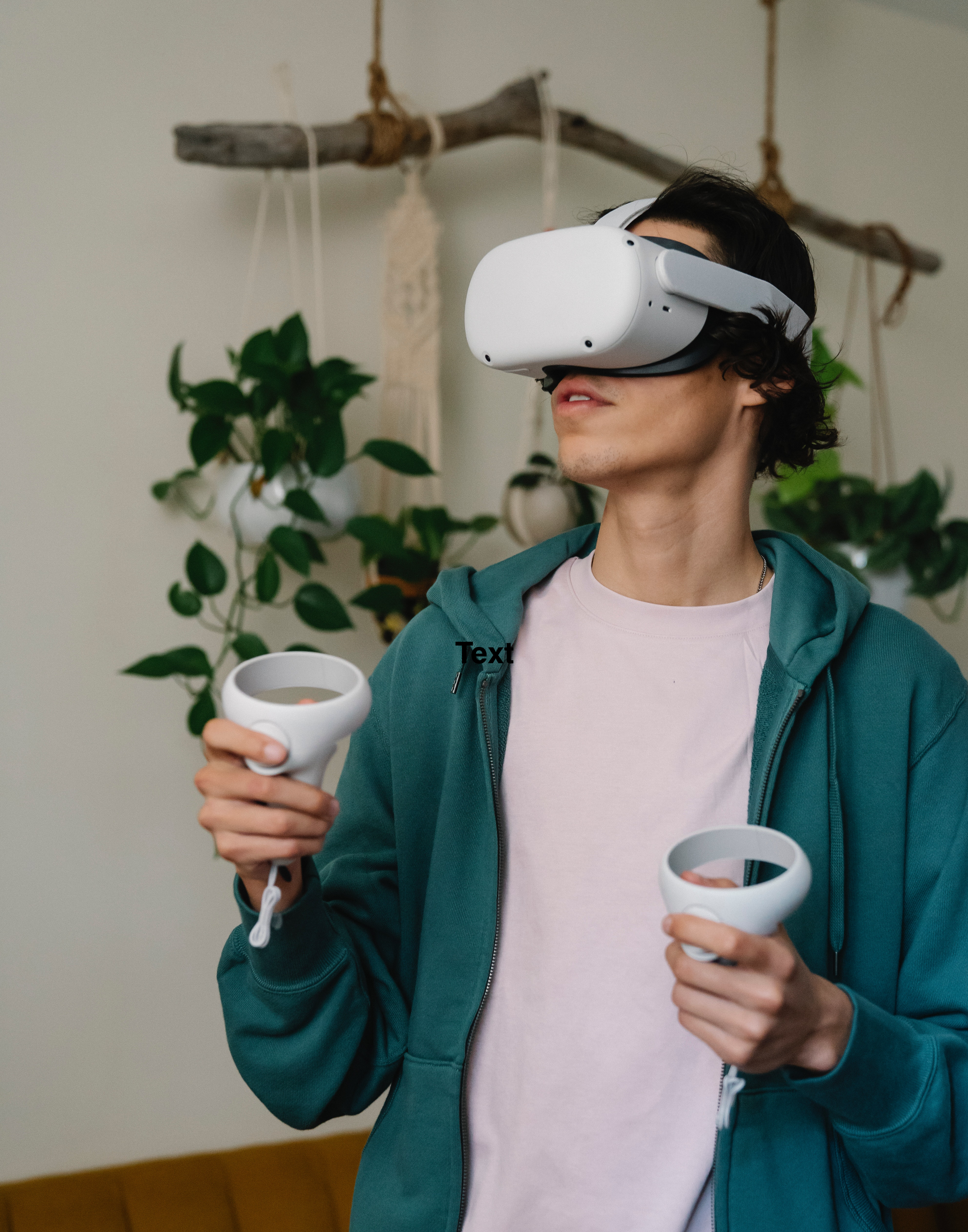
VR Therapy Isn’t Just Emerging; It’s Validated

Courage Isn’t the Absence of Fear

💡 Courage doesn’t mean you’re not afraid.

✈️ Whether it’s turbulence, a high ledge, merging onto a freeway or having a medical procedure — your body may panic, but your courage is in *showing up anyway*.

You are not your heart rate. You are not your sweaty palms.

🧘‍♂️ Breathe. Be present.

🧭 Reflection Prompt:
What would it look like to take one small step toward achieving control today?

A recent APA article brings attention to virtual reality’s growing use in therapy.  https://www.apaservices.org/practice/news/psychologists-uses-virtual-reality

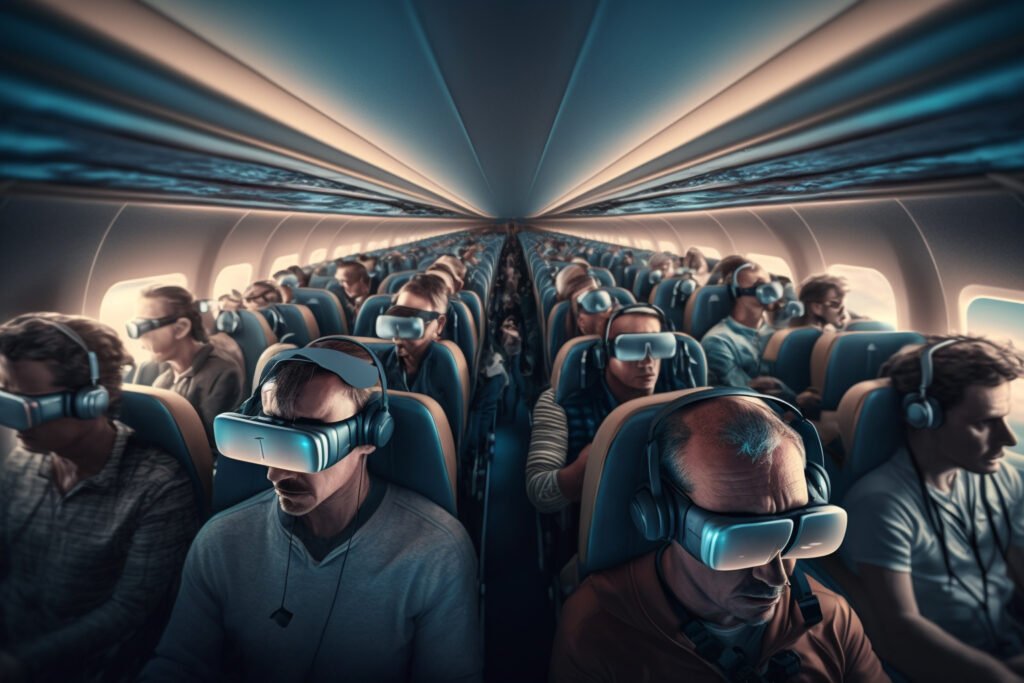
What’s exciting for us at the Virtual Reality Medical Center (VRMC)  is that this isn’t just emerging—it’s validated.

In a landmark study published in Cyberpsychology, Behavior, and Social Networking (now in its 28th year), we demonstrated the power of VR therapy for fear of flying. Our 3-year follow-up showed patients retained their progress with no relapse. https://www.liebertpub.com/doi/10.1089/109493103322278844

That kind of long-term success is what guides our daily work at VRMC. We use immersive VR, physiological monitoring, and clinical protocols to treat phobias, anxiety and stress-related disorders—turning research into meaningful recovery.

From science to support—VR therapy is here to stay.

#VirtualRealityTherapy #FearOfFlying #PTSD #Phobias #Cyberpsychology #VRMC #LongTermOutcomes

Navigating the Medical Metaverse: Using Objective Measures to Stay on Course

“Navigating the Medical Metaverse:  Using Objective Measures to Stay on Course” is now featured in the Cyberpsychology, Behavior, and Social Networking Journal, published by Mary Ann Liebert, Inc. Publishers.

“For those of us who pioneered VR therapy three decades ago, the ability to incorporate in-person VR, teleVR, and the metaverse to allow patients to access effective VR treatment wherever they are located was a distant dream. This tribrid VR therapy1 modality is only possible now because technology has flown so far, so fast…”

#VR #Flying #Phobias #Hybrid VR #TeleVR  #HealthcareInnovation #Telehealth #DigitalHealth #Cyberpsychology #PublicHealth #VR #DTx

https://www.liebertpub.com/doi/10.1089/cyber.2023.29305.editorial

How to Stay Calm During a Bumpy Flight

https://www.nytimes.com/2023/06/15/well/mind/flight-turbulence-anxiety.html

“Even the most seasoned travelers can get a little anxious when the plane starts shaking…”

Dr. Brenda Wiederhold, a licensed clinical psychologist in San Diego, regularly sees patients who have an intense fear of flying. For more than two decades, she has successfully used both real-life scenarios and virtual reality to help expose patients to various flying scenarios, like airplane turbulence and take-offs.

Licensed in California, Virginia and Belgium, we value the opportunity technology offers to see our patients virtually to help them overcome their fears and phobias.

Face Your Fear of Flying With These Research-Backed Tips and Strategies

https://www.prevention.com/life/a44053532/get-over-fear-of-flying

“When the fear doesn’t budge, consider exposure therapy using virtual reality: Using VR technology, patients go on realistic simulated flights to help them overcome their fears gradually. Research shows the treatment is highly effective in bringing flying anxiety back to earth, especially when combined with biofeedback, techniques that allow people to control their physiological responses…”

Dr. Brenda Wiederhold, a licensed clinical psychologist in San Diego, regularly sees patients who have an intense fear of flying. For more than two decades, she has successfully used both real-life scenarios and virtual reality to help expose patients to various flying scenarios, like airplane turbulence and take-offs.

Licensed in California, Virginia and Belgium, we value the opportunity technology offers to see our patients virtually to help them overcome their fears and phobias.

How to Stay Calm During a Bumpy Flight

flight-turbulence-anxiety.html

“Even the most seasoned travelers can get a little anxious when the plane starts shaking…”

Dr. Brenda Wiederhold, a licensed clinical psychologist in San Diego, regularly sees patients who have an intense fear of flying. For more than two decades, she has successfully used both real-life scenarios and virtual reality to help expose patients to various flying scenarios, like airplane turbulence and take-offs.

Licensed in California, Virginia and Belgium, we value the opportunity technology offers to see our patients virtually to help them overcome their fears and phobias.


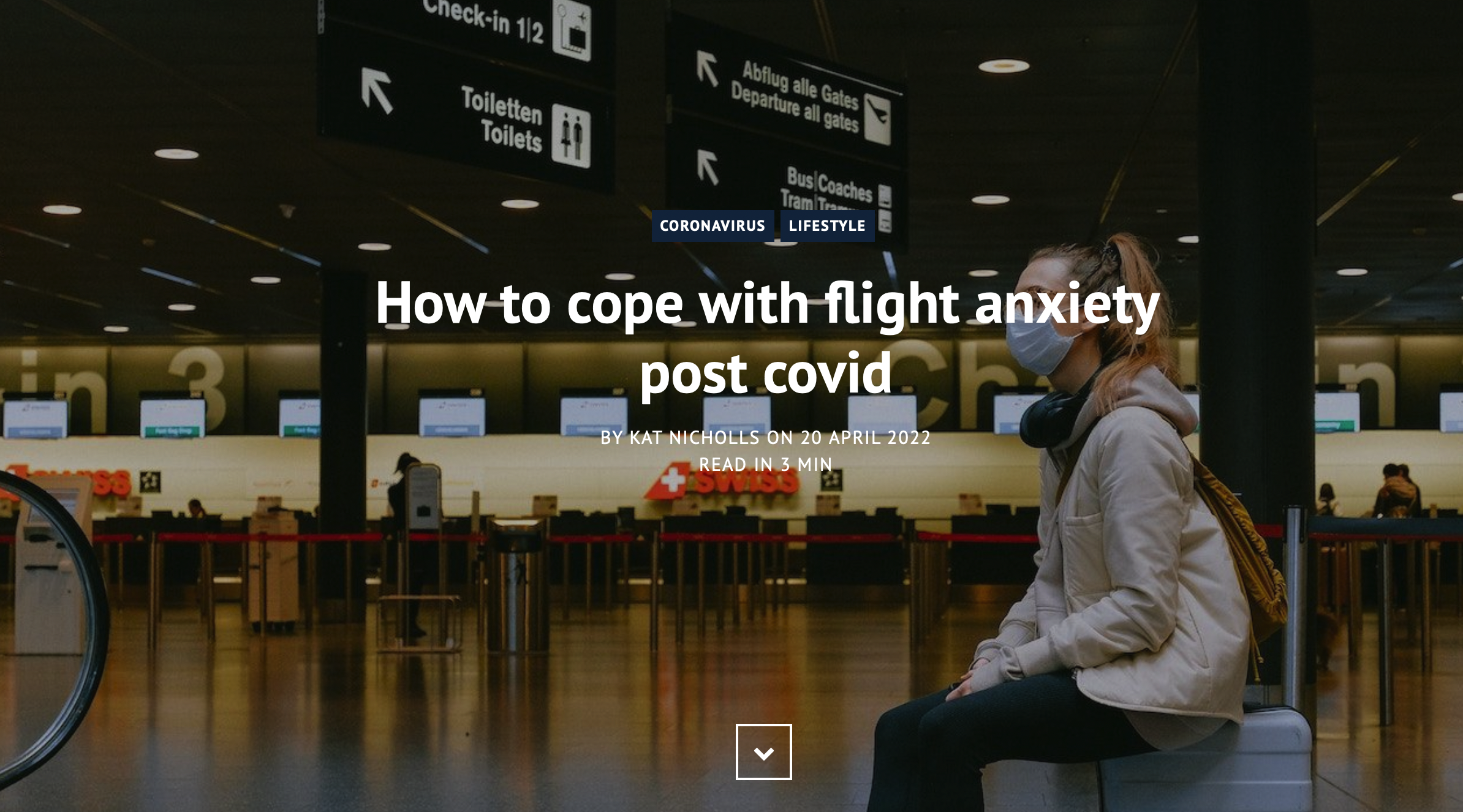
How to Cope With Flight Anxiety Post-COVID

https://happiful.com/how-to-cope-with-flight-anxiety-post-covid/

During the pandemic, most travel was restricted. A lot of us were confined to our homes or the occasional local walk and for some this became a comfort zone of sorts….


How to Cope With Flight Anxiety Post COVID

Virtual Reality may provide a solution for many.

Used in the U.S., Europe and Asia for over 25 years, Virtual Reality Exposure Therapy offers

a bridge between the imaginal world and the real world setting that has been shown to be

a more comfortable and effective starting point for many seeking to overcome their fears and

phobias.  For more information, contact us at frontoffice@vrphobia.com


Virtual Reality Helps Patients with Flying Phobias

Facing Your Fears Virtually

Virtual Reality Exposure Helps Overcome Fears


“Last September, my husband and I celebrated our 25th wedding anniversary and flew from California to Vermont. This was the first time I had flown in years.”

Like many people with aviophobia, Gaustad hadn’t always been afraid of flying. “We actually flew quite a bit. But on a flight to Las Vegas, our plane hit a few air pockets… enough turbulence to throw things around a bit… and although everything turned out okay, I got real real panicky and said, ‘I’m not going to be able to do this again.'” Sure enough, Gaustad and her family traveled by car, bus or train throughout the next decade.

Knowing the anniversary trip was coming up, Gaustad decided to do something about her phobia and learned that virtual reality therapy was available through her company’s employee benefits. “I only met with Brenda seven or eight times before the therapy worked on me,” she recalls. “In fact, before the sessions were completely over, I had already booked our flights to Vermont.”

“Yes I did feel sort of weird when I wasn’t flying, like there was someting wrong with me,” Gaustad admits. “It was important that my husband understood my problem. Be patient and work through this together.”

Contact us at frontoffice@vrphobia.com to learn more.

Fear of Flying

“It started when the plane took off.”

Keely Moore isn’t afraid of a plane crash. It’s the airplane cabin closing in on her.

“I just felt kind of trapped.”

Keely suffers from panic attacks—intense unexpected episodes of fear. The attacks trigger severe physical reactions including, racing heart, chest pains, and dizziness. The attack strike terror in Keely’s mind.

“You know the fear of dying, not knowing what’s going on”

The real world situation is too overwhelming for a lot of people.

So in virtual reality, we can put them in near real-world situations, have them experience that fear, teach them coping mechanisms, also teach them that those feelings aren’t dangerous.

Keely’s nine flights virtual flights have paid off. “It just feels more like excitement than anxiety.”


For more information on Keely’s story click here.

Kathy Feldman

By the time I decided to do Virtual Reality Therapy I had done most everything else I could possibly do that was offered. I had done:

  • Cognitive Therapy
  • Biofeedback
  • Hypnosis
  • EMDR
  • A Fear of Flying Clinic

At the time, the closest Virtual Reality Medical Office to my home was in San Diego, an eleven-hour car ride away. I had never had a problem flying until 1994, when my family and I boarded a small, general aviation plane for a tour over the Grand Canyon. While the plane was built for a fewer amount of people, we were packed into it like sardines. The plane ride was an hour’s worth of bumps, hits and jolts. It felt like the plane wanted to drop out of the sky under the weight of its many passengers and I was in a blind panic the entire time. It was this experience that imprinted a bad belief system and distorted view of flying in my head.

When the plane finally touched down, I got out of the plane and kissed the ground. Literally, the first words that came out of my mouth were “My life has been changed forever” and for seven years, that statement was true. While I continued to fly after that incident, it was never the same. For instance, when I had travel plans that involved flying, I would begin having anticipatory anxiety about three weeks before the scheduled flight. I would lose sleep. I would have nightmares. I would obsess about the flight.
My mind couldn’t think about anything else BUT the flight. My thought process would be filled with “what if’s.” It was so bad that by the time the day of travel came around, I emotionally didn’t have anything left over for the actual flight. My desire and drive and inner-strength for flying were completely zapped and spent. There was nothing emotionally left over for me to push through the actual flight. I felt paralyzed by the fear.

On one occasion, after I had boarded a plane with my two children and just before the Flight Attendant closed the door to the aircraft, I bolted off the plane leaving my children behind to fly on without me. I will never forget the tears and look of disappointment on their faces. At that point, I stopped flying all together for a number of years. I was exhausted and I was tired of putting my family through this unforgiving process each and every time we wanted to fly someplace.

Then, I found Virtual Reality Therapy. For me, because of the nature of the feedback I received during the VRT sessions, I was able to identify my “flying rough spots” easier. Virtual Reality Therapy gave me more concrete feedback about what I, as a nervous flyer, needed to work through to begin flying again. Because the “fear” had this “invisible hold” on me, Virtual Reality Therapy gave me a realistic and physiological perspective about myself that I could grasp and wrap my mind around so that I could actually understand what it was I needed to do to progress. Working yourself out of fear to the point where you can fly without anxiety or panic is a process that is unique to each person. Whatever you do, don’t stop trying – even if it seems nothing is working. In the long run, it will all pay off.

First, you need to be committed to finding a “cure” for yourself. Fear of flying is the type of thing that will creep back into your life if you don’t keep it in check. Therefore, don’t fly less because of the fear, FLY MORE! Fly as often as you possibly can. By flying more, you will be giving yourself a chance to purge your old belief system. By flying more, you will be giving yourself the chance to put your new belief system into place. By flying more, you will be able to prove to yourself that the old belief system simply doesn’t work any longer.

Helpful Hints

Take all the “decision making” out of flying beforehand. Do whatever you can “pre-flight” to prepare so that on the day of your flight, all the choices and decisions surrounding flying are done. There’s nothing worse for a nervous flier than to have to make even the simplest decisions and/or choices on the day of travel. The nervous flier’s mind is simply too balled up in fear at that point. For example:

  1. The night before you travel, lay out the clothing you will be wearing on your flight.
  2. Be absolutely packed by the day before travel, including your Bag of Tricks, which may include: 
       
    • MP3 player packed with your favorite music
    • Bottled water
    • Battery powered fan
    • Inspiration index cards
    • Pictures of loved ones
    • Reading materials
       
  3. Allow yourself plenty of time to get to the airport and checked in at the gate.
  4. Once at the airport, take a more positive cue from fellow travelers. Look around and notice how everybody is just going about their own business, without fear. Being around other travelers can put your “distorted view of flying” back into perspective.
  5. Once you have boarded, let the Flight Attendant know you are a nervous
    flier and ask to be checked on from time to time.
  6. Now that most airplanes have sky phones on them, arrange for a family member or friend to stay by the telephone while you are in flight. If you feel restless or out-of-sorts, use the sky phone to call that person. It is a very calming thing to do.
  7. Ask the Flight Attendant if you can meet the pilots. Talk with the Pilots about anything that’s on your mind. Pilots and Flight Attendants are the nicest and most helpful people. Remember, the airline industry wants your business. To get it, though, they must first earn your trust and respect – and they do this by wanting to make your flight comfortable. It’s OK to lean on them.


For more information on Kathy’s story, click here.